
Here’s something that haunted me during my first anatomy course: staring at a diagram of the human leg and realizing I couldn’t distinguish between the vastus lateralis and the vastus medialis—two muscles sitting right next to each other.
I wasn’t alone. Around me, fellow students were drowning in a sea of Latin names, frantically making flashcards for muscles they’d forget by morning. We were trying to memorize over 600 skeletal muscles using the same methods we’d used for high school vocabulary tests.
It doesn’t work. The human muscular system is too vast, too interconnected, and too complex for random drilling. But here’s what I discovered: the same systematic approach that ancient Stoics used to organize complex philosophical concepts can transform how you master anatomy.
The Anatomy Student’s Nightmare: When Traditional Methods Collapse
Picture this: It’s 2 AM, you’re surrounded by scattered flashcards, and your anatomy exam is in six hours. You’ve been drilling muscle names for weeks, but they still blur together in your mind. The gastrocnemius becomes the gracilis. The rhomboid major vanishes entirely when you need it most.
This scenario plays out in medical schools worldwide. Students face what researchers describe as memorizing “large volumes” of anatomy in limited time, with gross anatomy being their first high-stakes course involving intense recall demands.

The numbers are staggering. The human body contains over 600 skeletal muscles, each with specific origins, insertions, actions, and nerve supplies. Traditional memorization approaches—the ones most students default to—create a perfect storm of confusion.
I learned this firsthand when I spent three weeks making 400+ flashcards for my first anatomy block. The result? I could recite individual muscle names but couldn’t group them functionally or locate them reliably during practical exams. I had information without understanding, pieces without the puzzle framework.
The Hidden Cost: What Muscle Memory Failure Really Costs You
The consequences of poor anatomy memorization extend far beyond failed exams. During my clinical rotations, I watched students hesitate when attending physicians asked basic questions about muscle groups. That hesitation bred doubt—both in themselves and their supervisors.
Academic consequences hit first. Failed anatomy exams delay graduation, increase student debt, and force students to repeat expensive courses. But the professional impact cuts deeper.

In clinical settings, weak anatomical foundations undermine confidence during physical examinations. When you can’t quickly recall which muscles the median nerve innervates, you struggle to understand carpal tunnel syndrome. When the rotator cuff muscles remain fuzzy concepts, shoulder injuries become medical mysteries.
I remember a particularly humbling moment during my orthopedic rotation. The surgeon asked me to explain why a patient couldn’t externally rotate their shoulder after a fall. I knew something was wrong with the rotator cuff, but I couldn’t systematically work through which specific muscle was likely damaged. My scattered anatomy knowledge failed me when it mattered most.
The psychological toll compounds over time. Students develop impostor syndrome, wondering if they belong in medicine when they can’t master what seems like basic foundational knowledge. This anxiety often leads to ineffective study marathons—more time spent, less retained, higher burnout rates.
Why Common Solutions Fail: The Memorization Methods That Backfire
The Flashcard Trap
Most students turn to flashcards because they’re familiar, not because they’re effective for anatomy. Random drilling creates what I call “information soup”—isolated facts floating without meaningful connections.
I made this mistake early. My flashcards looked like this: “Biceps brachii: Origin – coracoid process and supraglenoid tubercle. Insertion – radial tuberosity.” Technically correct, completely forgettable.
The problem? Flashcards encourage random recall order. You might review the biceps brachii, then jump to the gastrocnemius, then back to a deep neck muscle. Your brain never builds the spatial and functional relationships that make anatomy coherent.

The Memory Palace Misconception
Memory palaces work brilliantly for many subjects, but muscles present unique challenges. I attempted to place all the forearm muscles in my childhood home, assigning each muscle to specific rooms and furniture pieces.
The system collapsed during exams. When questions asked me to identify muscles by nerve innervation or functional groups, my spatial palace couldn’t reorganize itself. I’d memorized muscles by house location, not by the anatomical relationships I actually needed.
Cognitive learning expert Mullen Memory warns against this exact problem: “Memory palaces create crutches that prevent adaptation to novel views like cross-sections.” Clinical practice requires flexible knowledge that can adapt to different contexts, not rigid spatial associations.
The Image-Only Approach
Beautiful anatomy atlases seduce students into thinking visual memorization alone suffices. I spent hours staring at colorful muscle diagrams, believing I was “studying.”
This approach fails because it creates visual dependency. During cadaver labs, real muscles look different—they’re not color-coded, they’re partially covered by fascia, and they’re positioned in ways textbook illustrations don’t capture.
More critically, image-only learning prevents the verbal fluency you need for professional communication. Patients and colleagues don’t communicate through pointing at pictures. You must articulate anatomical relationships clearly and confidently.
The Ancient Wisdom: How Stoics Mastered Complex Information
Marcus Aurelius didn’t have modern anatomy textbooks, but he understood something crucial about learning complex systems: organization precedes memorization.
Reading his Meditations, you notice how systematically he approaches philosophical concepts. He doesn’t randomly jump between ideas about virtue, death, and duty. Instead, he creates frameworks—organizing thoughts by theme, building from simple principles to complex applications.
“Confine yourself to the present.” – Marcus Aurelius
This principle applies perfectly to anatomy learning. Instead of overwhelming yourself with all 600+ muscles simultaneously, the Stoic approach demands systematic progression through manageable segments.

Epictetus emphasized methodical practice: “First say to yourself what you would be; and then do what you have to do.” In anatomy terms: first organize your learning framework, then execute systematic practice within that structure.
Ancient Roman military training exemplified this approach. Soldiers didn’t randomly practice sword movements. They learned defensive positions first, then offensive strikes, then combinations—each building systematically on previous knowledge. Complex formations became learnable because they were broken into logical progressions.
The Stoic virtue of sophia (wisdom) comes through patient, methodical study, not frantic cramming. When I finally applied this ancient principle to anatomy, everything changed.
The Modern Method: Scientific Memory Principles Meet Ancient Wisdom
Recent research validates what Stoic philosophers understood intuitively: systematic organization dramatically improves complex memorization.
A 2024 study published in the NIH’s research database introduced a breakthrough “number system” for anatomy self-retrieval practice. Instead of random drilling, researchers taught students to organize muscles numerically by region.
For example: “5 muscles in thorax/abdomen: 1 anterior, 3 lateral, 1 posterior” or “8 anterior forearm muscles organized in pairs, 12 posterior muscles grouped in threes.”
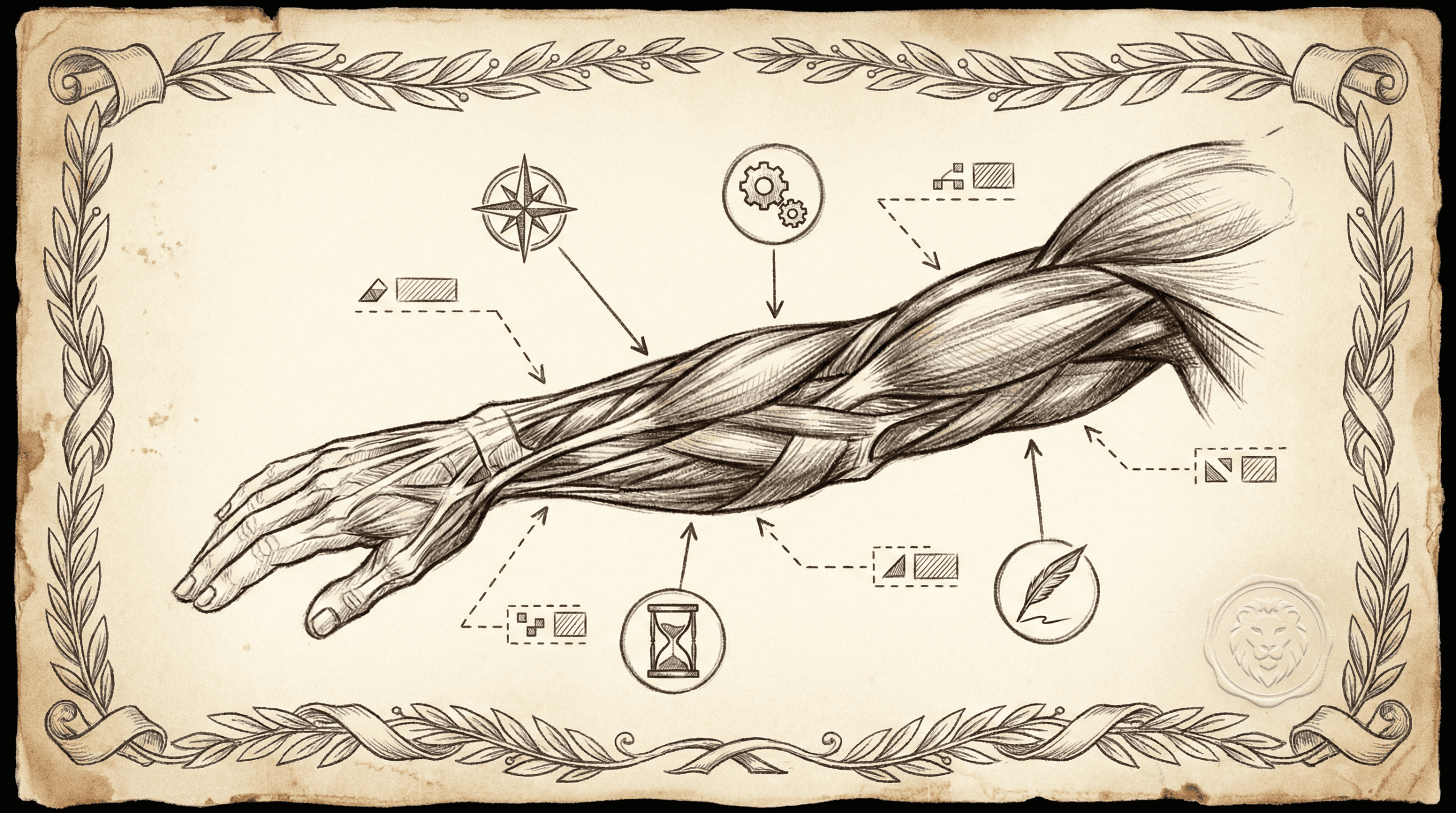
The results were remarkable. Students recalled significantly more muscles when cued with numerical frameworks compared to random testing. More importantly, they retained the information longer and could apply it more flexibly during practical exams.
Active Recall Over Passive Review
The research confirmed another crucial principle: overt recall (writing or speaking responses aloud) dramatically outperforms covert recall (thinking answers silently) for complex materials like anatomy.
This aligns with what cognitive scientists call “encoding-retrieval specificity.” The way you practice retrieving information should match how you’ll need to use it. If exams require you to verbally identify muscles or write their names, your practice should emphasize verbal and written recall, not just visual recognition.
The Two-Phase Integration Approach
Effective anatomy mastery requires two distinct phases, and getting the order right matters enormously.
Phase 1: Verbal Fluency Development
Build systematic, logically ordered lists of muscles without visual aids. Practice recalling these lists until you can fluently recite muscles by region, function, or nerve supply.
Phase 2: Visual Integration
Only after achieving verbal fluency should you overlay this knowledge onto 3D atlases and cadaver images. This sequence prevents visual dependency while building the flexible knowledge base you need.
I learned this lesson painfully. My first attempt involved simultaneous visual and verbal learning, which created confusion between what muscles looked like and how they functionally related. When I separated these phases, my retention improved dramatically within weeks.
Step-by-Step: Your Complete Muscle Memorization System
Step 1: Regional Organization Setup
Begin by dividing the human body into eight manageable regions:
– Head and neck
– Trunk (chest and back)
– Abdomen
– Pelvis
– Upper arm and shoulder
– Forearm and hand
– Thigh and hip
– Leg and foot
For each region, create numerical frameworks. Don’t invent arbitrary numbers—base them on actual anatomical organization.
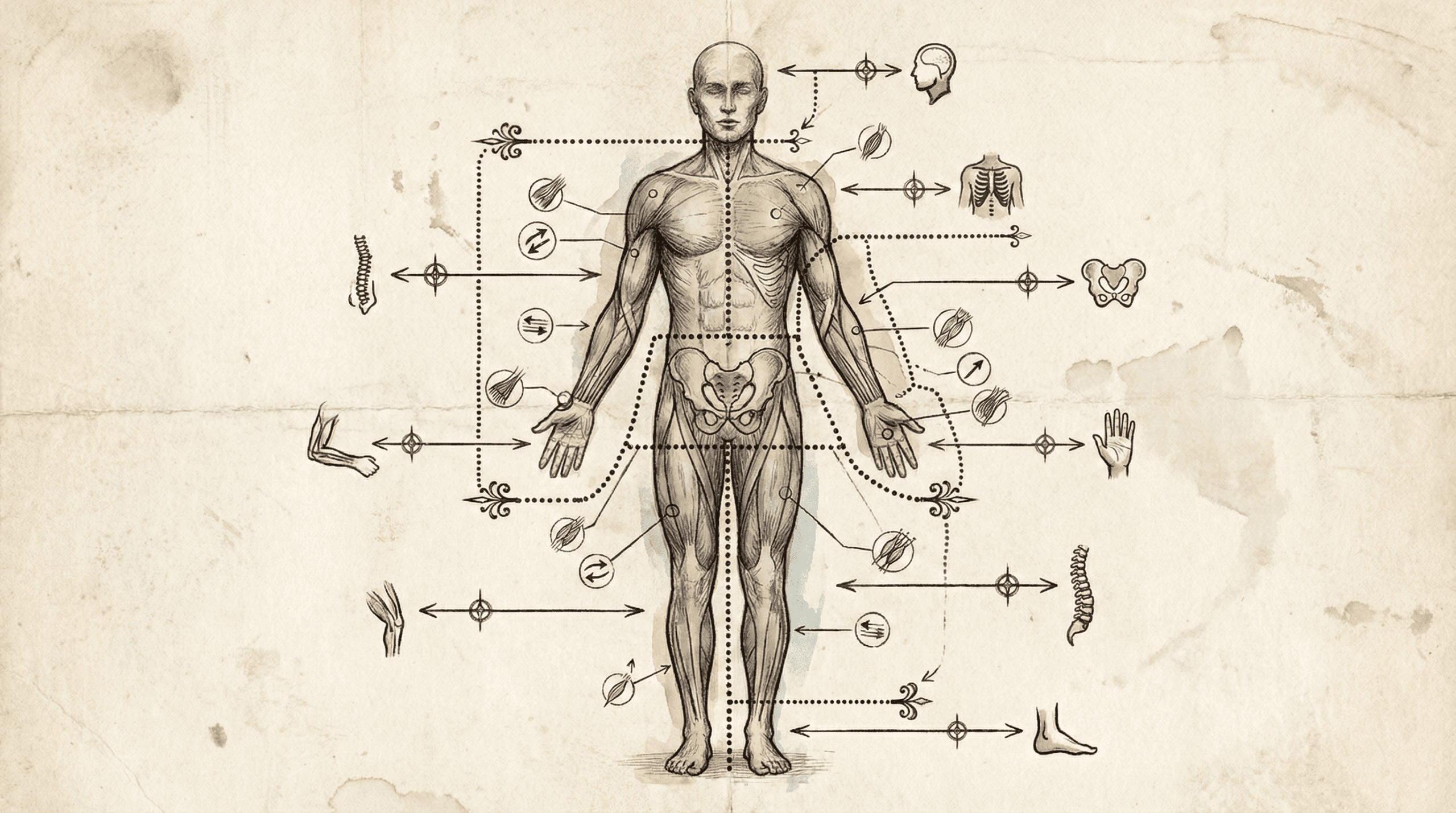
For the rotator cuff, your framework becomes: “4 rotator cuff muscles: 2 external rotators (infraspinatus, teres minor), 1 internal rotator (subscapularis), 1 abductor (supraspinatus).”
This numerical approach forces you to think systematically. When you know there are 4 rotator cuff muscles and can only recall 3, you immediately recognize the gap and search for the missing piece.
Step 2: Systematic List Creation
Build your muscle lists using consistent anatomical relationships. I prefer superficial-to-deep organization, but medial-to-lateral or anterior-to-posterior work equally well. Consistency matters more than the specific system.
For the anterior forearm, create this progression:
1. Superficial layer: Pronator teres, flexor carpi radialis, palmaris longus, flexor carpi ulnaris
2. Intermediate layer: Flexor digitorum superficialis
3. Deep layer: Flexor digitorum profundus, flexor pollicis longus, pronator quadratus
Notice how this creates logical chunks: 4 superficial muscles, 1 intermediate, 3 deep. Your brain can handle “4-1-3” far better than “8 random forearm muscles.”
Include essential details for each muscle, but keep the format consistent:
– Origin: Where the muscle begins
– Insertion: Where the muscle attaches
– Primary action: The muscle’s main function
– Nerve supply: Which nerve innervates the muscle
Step 3: Active Retrieval Practice
This step determines your success. Passive reading accomplishes nothing; only active retrieval builds lasting memory.
Schedule daily 15-minute sessions focusing on verbal recall without any visual aids. Start with number-cued practice: “Name the 4 rotator cuff muscles in order.” Speak your answers aloud or write them down—covert thinking doesn’t count.

Progress through increasing difficulty levels:
1. Week 1: Muscle names only, cued by numbers
2. Week 2: Add origins and insertions
3. Week 3: Include primary actions
4. Week 4: Add nerve supplies and test functional groupings
Track your accuracy, but don’t panic about mistakes early on. I failed to recall half the forearm muscles during my first week. By week 3, I was hitting 95% accuracy consistently.
Step 4: Visual Integration
Only after achieving solid verbal fluency should you integrate visual elements. This timing prevents the visual dependency that destroys flexible recall.
Use high-quality anatomical atlases or 3D anatomy apps. Start with clear, isolated views of each muscle group. Practice identifying muscles from multiple angles—anterior, posterior, lateral, and medial views.
Progress to challenging perspectives: cross-sectional anatomy, partially dissected cadaver images, and clinical imaging like MRI or CT scans. Your verbal foundation will allow you to adapt to these novel visual presentations.
Step 5: Functional Grouping
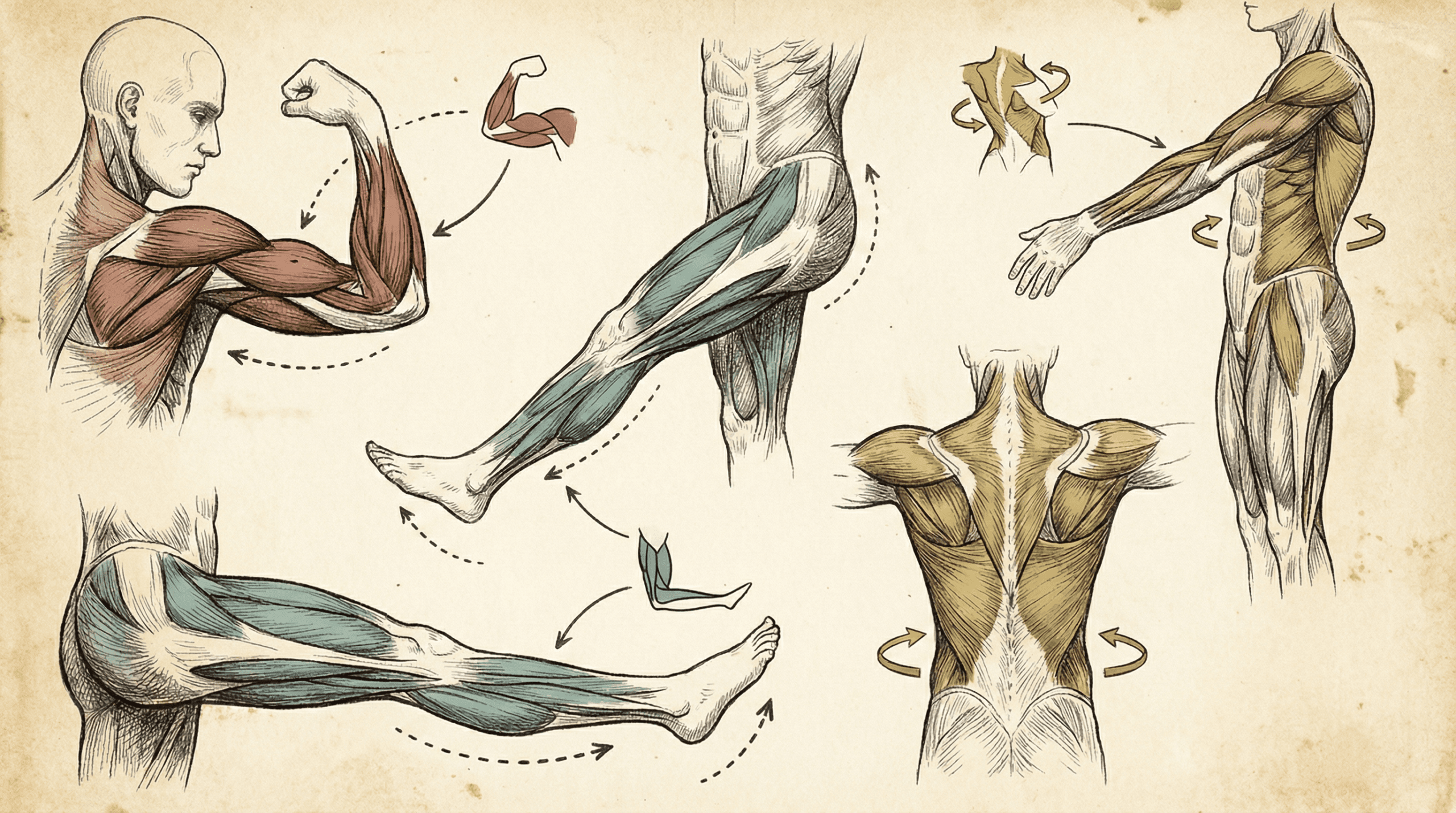
Master anatomy requires understanding muscles as functional units, not isolated structures. Group muscles by:
Nerve innervation patterns: All muscles innervated by the median nerve, radial nerve, etc.
Movement types: All shoulder flexors, all knee extensors, all ankle plantarflexors
Clinical relationships: All muscles involved in rotator cuff tears, all muscles affected by carpal tunnel syndrome
I practice this by creating “clinical scenarios” for myself: “A patient has median nerve damage at the elbow. Which muscles will be affected?” This type of practice builds the applied knowledge you need for clinical success.
Personal Experience: How This System Transformed My Learning
I wish I could say I discovered this system immediately, but the truth is messier. My first anatomy course was a struggle precisely because I used every failed method I’ve described above.
I made 400+ random flashcards. I tried placing muscles in memory palaces. I stared at beautiful atlas illustrations for hours. My study time increased, but my test scores stagnated around 75%—passing, but not the mastery I needed for medical school confidence.
The breakthrough came during my second anatomy course when I reluctantly abandoned my flashcards and committed to systematic list-making. I started with just the rotator cuff muscles, creating my “2-1-1” framework (2 external rotators, 1 internal rotator, 1 abductor).
Within three days, I could reliably recite all 4 muscles with their actions. More importantly, I understood how they worked together functionally. When the course covered shoulder pathology, I grasped rotator cuff tears immediately because I understood the anatomical foundation.
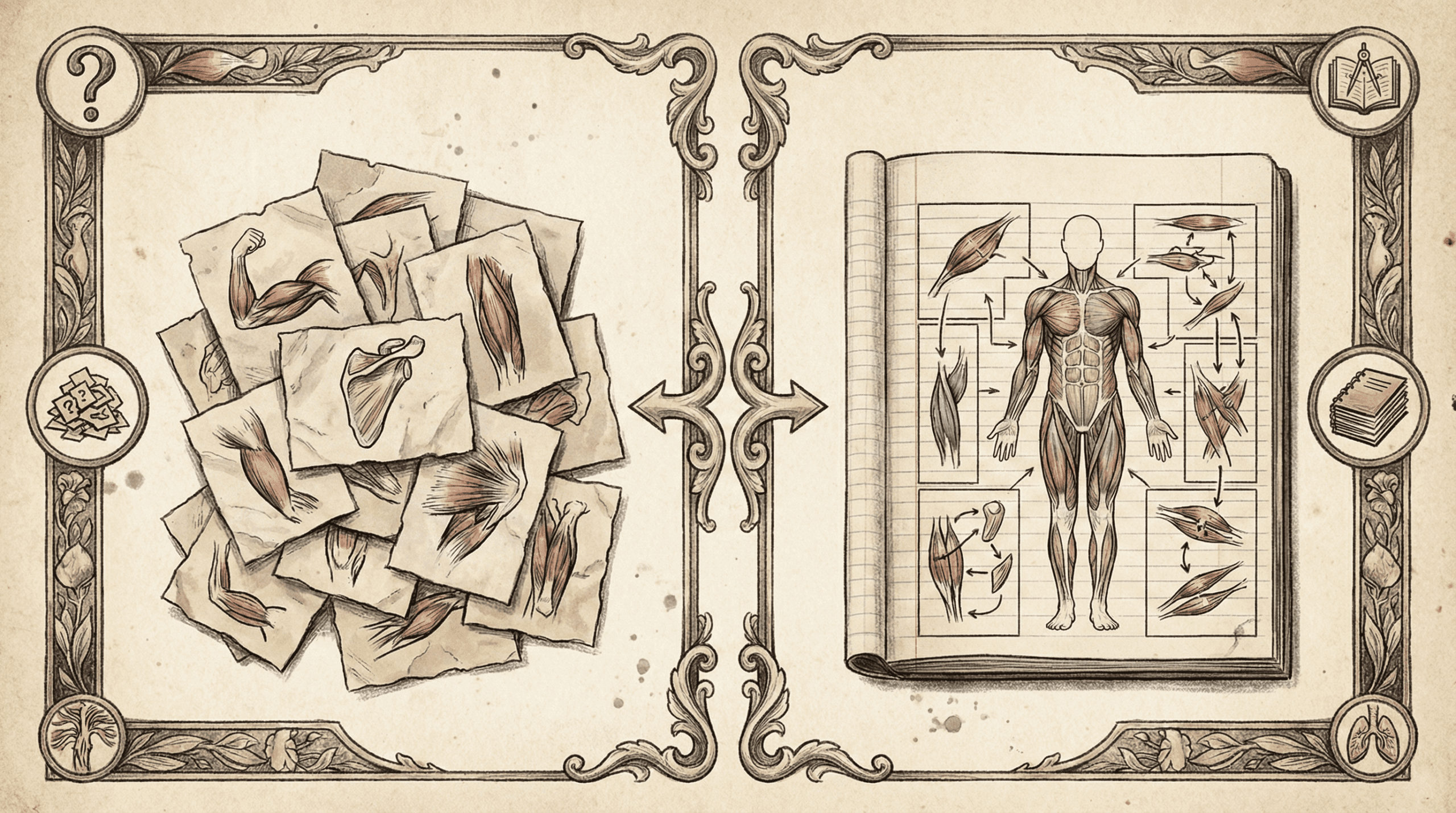
I expanded this approach to the entire upper extremity over two weeks. The time investment felt enormous initially—building systematic lists and frameworks took hours. But the payoff was dramatic. My practical exam scores jumped to the mid-90s, and more importantly, I felt genuinely confident during clinical correlations.
The most surprising benefit was long-term retention. Muscles I learned systematically during that second course remain easily accessible years later. Random flashcard knowledge vanished within months, but systematic frameworks proved durable.
Frequently Asked Questions
How long does it take to memorize all muscles in the body using this system?
Most students can master the major muscle groups (roughly 200 clinically important muscles) in 6-8 weeks with consistent daily practice. Complete mastery of all 600+ skeletal muscles takes 3-4 months of systematic study. The key factors affecting your timeline include prior anatomy exposure, daily practice consistency (15-30 minutes minimum), and how strictly you follow the systematic progression rather than jumping randomly between regions.
Should I use Anki or other spaced repetition software for muscle memorization?
Spaced repetition software works best during Phase 1 (verbal list building) but can hinder Phase 2 (visual integration). Use Anki for drilling systematic muscle lists and numerical frameworks, but avoid image-heavy cards that create visual dependency. Format cards as simple text: “Name the 4 rotator cuff muscles” with the systematic list as your answer. Once you achieve verbal fluency, transition to physical atlases and 3D apps for visual integration.
What’s the best order to learn muscle groups to avoid overwhelming myself?
Start with the rotator cuff (only 4 muscles) to learn the systematic method without overwhelming complexity. Progress to the anterior forearm (8 muscles in clear layers), then the posterior forearm. This builds confidence with manageable groups before tackling complex regions like the deep back muscles. Save the head/neck muscles for last—they’re numerous and have confusing names that benefit from experience with the systematic approach.
How do I avoid confusing similar muscle names like the various “vastus” muscles?
Etymology-based memory aids work brilliantly for similar names. “Vastus” means “huge,” so all vastus muscles are large thigh muscles. “Lateralis” = lateral side, “medialis” = medial side, “intermedius” = between the other two. Group similar names together systematically: all the “flexor carpi” muscles bend the wrist, all the “extensor digitorum” muscles straighten fingers. Learning the Latin roots eliminates confusion and makes new muscle names predictable.
Can I adapt this systematic approach for other anatomical systems like bones and nerves?
Absolutely. The numerical framework principle works for any complex anatomical system. For bones, organize by region with systematic counting: “14 facial bones: 6 paired, 2 unpaired.” For nerves, group by origin: “12 cranial nerves organized by function: 3 sensory, 4 motor, 5 mixed.” The key is creating logical frameworks first, then building systematic lists within each framework. Avoid random drilling regardless of the anatomical system you’re studying.
Your Next Action: Start Your Systematic Muscle Mastery Today
Choose one small muscle group right now—I recommend the 4 rotator cuff muscles. Create your numerical framework: “4 rotator cuff muscles: supraspinatus (abduction), infraspinatus (external rotation), teres minor (external rotation), subscapularis (internal rotation).”
Set a timer for 10 minutes and practice active recall of these 4 muscles with their primary actions. Write them down repeatedly without looking at any references. Do this once today, once tomorrow, and once the day after.
That’s it. Don’t overwhelm yourself with elaborate study schedules or complex apps. Master these 4 muscles systematically, and you’ll understand exactly how to approach the remaining 596.
If you’ve been finding these articles helpful, I recommend “Stoic Memory”, our course that uses modern technologies to help you learn even faster! We leverage the power of AI to get as close to downloading information in your brain as is possible, and teach you all the ancient methods with modern accelerators.
Guided Practice
Memory Palace Practice
Close your eyes and follow along with this guided practice.
Find a quiet place, close your eyes, and follow along.