

Here’s something that happened to me during my second year studying philosophy: I was pulling 14-hour study marathons, chugging energy drinks, and falling asleep on my textbooks. I thought more hours meant better grades.
I was wrong. Dead wrong.
My memory was shot, my relationships were crumbling, and ironically, my grades were getting worse despite studying twice as much as my classmates. That’s when I discovered the 9-8-7 rule—and everything changed.
The Study Schedule Trap That’s Stealing Your Success
Most students fall into the same trap I did. We believe that academic success comes from grinding harder, studying longer, and sacrificing everything else on the altar of achievement.
The reality? I’ve watched pre-med students burn out spectacularly after attempting 16-hour study days for weeks. Meanwhile, their peers who maintained structured, balanced schedules not only outperformed them but actually enjoyed the process.
This isn’t about lack of dedication. It’s about understanding a fundamental truth that ancient philosophers knew intuitively: sustainable excellence requires rhythm, not just intensity.

When I tracked my actual productive study time during those marathon sessions, I discovered something shocking. Out of 14 hours “studying,” I was only truly focused for about 4-5 hours. The rest was mental fog, scrolling through my phone, and staring blankly at pages without absorbing anything.
The students who studied less but with better structure were getting triple my retention rate. They had energy for exercise, maintained their friendships, and somehow seemed less stressed despite covering the same material.
That’s when I realized I didn’t have a time problem—I had a system problem.
The Hidden Cost: What Chaotic Study Habits Really Rob From You
The damage from unstructured study habits goes far deeper than poor grades. When I was stuck in the marathon study trap, I experienced what researchers call “cognitive overhead”—the mental energy wasted on constant decision-making about when to study, what to study, and how long to push myself.
Every day started with decision fatigue before I even opened a book. Should I study chemistry first or psychology? How many hours should I aim for today? When should I take breaks? These micro-decisions accumulated into a massive drain on my mental resources.
The sleep debt compounded everything. Seven consecutive nights of 4-5 hours of sleep didn’t just make me tired—it literally impaired my ability to form new memories. I was studying harder to compensate for a brain that couldn’t properly encode information.

But the most insidious cost was social isolation. When you’re always “behind” on studying, every social interaction feels like stolen time. I stopped exercising, rarely called my family, and declined every social invitation. This isolation created a feedback loop that made studying feel even more miserable.
Research from the University of California found that students who maintain balanced schedules show significantly better retention rates than those who study without structure. The reason isn’t mysterious—our brains need recovery time to consolidate memories, and our bodies need social connection and physical activity to maintain the energy for sustained cognitive effort.
Why Common Study Schedule Solutions Keep You Stuck
The advice I found everywhere made things worse. “Study when you feel motivated” sounds flexible and intuitive, but motivation is an unreliable fuel source. Some days I felt motivated to study for 12 hours; other days I couldn’t focus for 20 minutes. This created an all-or-nothing cycle that destroyed consistency.
The “study harder” myth is particularly destructive. I met countless students who wore their exhaustion like a badge of honor, competing over who pulled more all-nighters. But sleep-deprived studying is like trying to fill a bucket with holes in it—you can pour in more effort, but retention stays frustratingly low.
Rigid perfectionist schedules were equally problematic. I tried mapping out 16-hour study days down to 15-minute intervals. The moment I fell behind (which was inevitable), I’d abandon the entire system rather than adapt it.
The missing piece was understanding circadian rhythms. I was fighting my biology instead of working with it, scheduling my most demanding cognitive work during natural energy dips, then wondering why I felt like I was swimming upstream.
The Ancient Wisdom: What Marcus Aurelius Knew About Daily Structure
Marcus Aurelius didn’t have the luxury of chaotic study habits. As emperor of Rome, his days required structure that balanced governance, learning, and personal reflection. His approach to daily rhythm offers profound insights for modern learners.
“You have power over your mind—not outside events. Realize this, and you will find strength.” – Marcus Aurelius
This principle applies directly to study schedules. We can’t control unexpected interruptions, difficult material, or energy fluctuations—but we can control our response by having a flexible structure in place.
The Romans understood the distinction between negotium (business/work) and otium (leisure/renewal). They didn’t view these as opposing forces but as complementary aspects of a productive life. Marcus Aurelius wrote his Meditations during military campaigns, finding moments of philosophical reflection within a demanding schedule.

Seneca captured this wisdom perfectly: “It is not that we have a short time to live, but that we waste a lot of it.” The waste he identified wasn’t in rest or leisure—it was in the mental chaos of unstructured time.
Ancient Stoics practiced what they called “premeditation of obstacles”—mentally rehearsing how they’d handle disruptions to their planned schedule. This wasn’t pessimism; it was practical wisdom that allowed them to maintain equanimity when plans inevitably changed.
The Modern Method: How the 9-8-7 Rule Creates Sustainable Excellence
The 9-8-7 rule allocates your 24-hour day into three components: 9 hours for studying, 8 hours for sleep, and 7 hours for life activities. This isn’t arbitrary—it’s based on research about optimal cognitive load and recovery patterns.
Those 9 study hours aren’t meant to be consecutive. When I first implemented this system, I divided them into focused blocks that aligned with my natural energy rhythms: 3 hours in the morning when my mind was sharpest, 4 hours spread across midday sessions, and 2 hours in the early evening.
The 8-hour sleep allocation recognizes that memory consolidation happens during rest. While some people need 9 hours and others function well on 7, eight hours hits the sweet spot for most learners. Quality matters more than exact duration—a solid 7.5 hours of uninterrupted sleep beats 8.5 hours of fragmented rest.

The 7 hours for “life activities” is where the magic happens. This includes meals, exercise, social time, and personal care. These aren’t distractions from learning—they’re essential support systems that make sustained studying possible.
When I tracked my energy levels before and after implementing 9-8-7, the difference was remarkable. Instead of feeling drained by hour 6 of studying, I maintained focus throughout longer sessions. The structured breaks actually increased my total productive study time.
Step-by-Step: Implementing Your 9-8-7 Study System Today
Phase 1: Map Your Current Reality (Week 1)
Before changing anything, spend seven days tracking how you actually spend your time. I use a simple smartphone app to log each hour as “Study,” “Sleep,” “Life,” or “Transition.” Most people vastly overestimate their study time and underestimate how much time they lose to decision-making and distraction.
During my tracking week, I discovered I was spending 3 hours daily in “transition time”—the mental switching between activities. This insight alone helped me build more realistic schedules.
Pay attention to your natural energy patterns. Are you sharpest in the morning or evening? When do you naturally feel sleepy? When is your attention most scattered? These patterns will inform your personalized 9-8-7 template.
Phase 2: Design Your 9-8-7 Template (Week 2)
Here’s the template I’ve refined over years of practice:
Morning Block (6:00-10:00 AM):
– 6:00-6:30: Wake up, hydrate, light movement
– 6:30-7:00: Breakfast and review daily plan
– 7:00-10:00: Study Session 1 (3 hours of deep work)
Midday Block (10:30 AM-4:30 PM):
– 10:30-12:30: Study Session 2 (2 hours)
– 12:30-1:30: Lunch and social time
– 1:30-3:30: Study Session 3 (2 hours)
– 3:30-4:30: Exercise or outdoor time
Evening Block (4:30-9:00 PM):
– 4:30-6:30: Study Session 4 (2 hours)
– 6:30-7:30: Dinner and family time
– 7:30-9:00: Study Session 5 (1.5 hours, review and consolidation)
Night Routine (9:00 PM-6:00 AM):
– 9:00-10:00: Personal time, social connection
– 10:00-10:30: Wind down routine
– 10:30-6:00: Sleep (7.5 hours)

Phase 3: The Stoic Implementation
Start with 70% compliance, not perfection. If you nail 5 out of 7 days in your first week, that’s a victory. The goal is building sustainable habits, not achieving impossible standards.
Practice “premeditation of obstacles” by planning how you’ll handle common disruptions. What if you oversleep? What if a study session runs long? What if friends invite you out during scheduled study time? Having predetermined responses eliminates decision fatigue when these situations arise.
Build in weekly reflection sessions every Sunday evening. Ask yourself: What worked well? What felt forced or unsustainable? How can I adjust the schedule to work better with my life?
Week-by-Week Progression: Making the 9-8-7 Rule Stick
Week 1-2: Foundation Building
Focus solely on the sleep component. Consistent sleep timing creates the foundation for everything else. I started by setting a non-negotiable bedtime and wake-up time, even on weekends.
Don’t worry about perfect study blocks yet. Just track your current patterns and aim for 8 hours of sleep consistently.
Week 3-4: Adding Study Structure
Introduce morning study blocks first. Your brain is typically freshest in the first few hours after waking, making this the easiest time to establish focused work sessions.
Keep afternoon and evening schedules flexible while you adjust to morning routine.
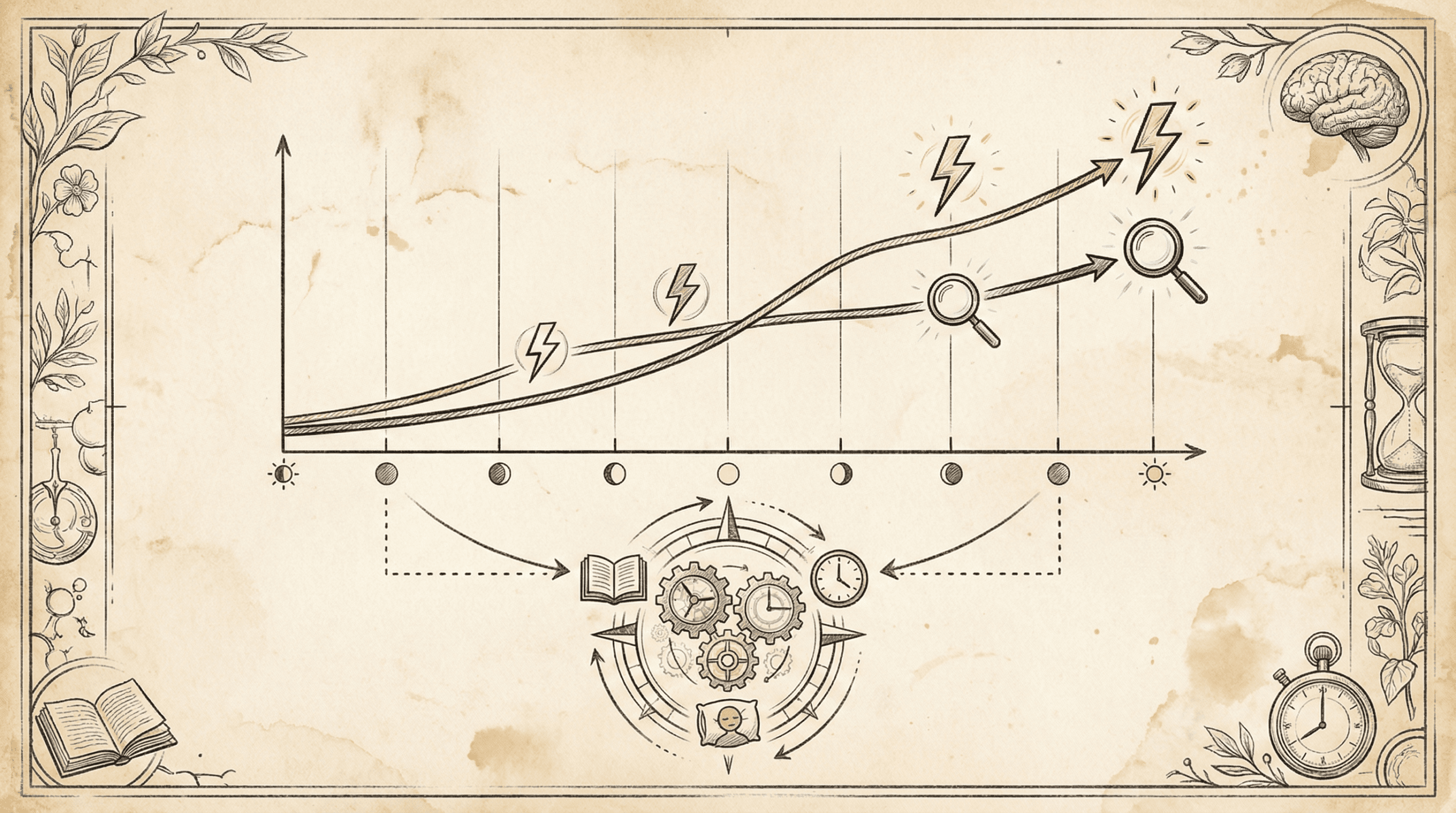
Week 5-6: Full System Implementation
Add midday and evening study blocks. By now, your sleep schedule should be stable, and morning sessions should feel natural.
This is when you’ll likely encounter the most resistance. Your brain will try to revert to old patterns. This is normal—keep adjusting rather than abandoning the system.
Week 7-8: Optimization and Personalization
Fine-tune timing based on your energy patterns. Maybe you need longer breaks between sessions, or perhaps you’re naturally more focused in the evening than morning.
The goal isn’t to follow my exact schedule—it’s to create your personalized version of balanced, sustainable study habits.
Advanced Strategies for 9-8-7 Mastery
Energy Management Within Study Blocks
Not all study hours are created equal. I reserve my highest-energy hours for the most challenging material and use lower-energy periods for review, organization, and lighter reading.
During my 3-hour morning block, I tackle the most cognitively demanding work in the first 90 minutes, take a 15-minute break, then use the remaining time for practice problems or review.
The 90-Minute Rule
Research shows our brains naturally cycle through periods of high focus every 90 minutes. I structure my study sessions around these ultradian rhythms, working in 90-minute sprints with 15-30 minute breaks.
This aligns perfectly with the 9-8-7 framework while honoring our natural attention spans.
Seasonal Adjustments
Your 9-8-7 schedule should adapt to different life phases. During exam periods, I shift to a 10-7-7 allocation for 1-2 weeks maximum. During lighter academic periods, 8-8-8 provides more balance for other pursuits.
The key is returning to your baseline 9-8-7 rhythm rather than letting temporary adjustments become permanent habits.
Social Integration
One of the biggest challenges with any study schedule is maintaining relationships. I’ve learned to be transparent with friends and family about my schedule while being flexible for important social opportunities.
I protect my morning study block religiously but remain negotiable about evening sessions when meaningful social opportunities arise.

Frequently Asked Questions
How can I implement the 9, 8, and 7 study rule effectively?
Start with the sleep component first—establish consistent bed and wake times before worrying about study blocks. Track your current schedule for one week to understand your baseline, then gradually introduce structured study periods. Begin with just the morning study block for week one, add midday sessions in week two, and complete the full system by week three. The key is building slowly rather than attempting dramatic overnight changes.
What are some common challenges when following the 9, 8, and 7 study rule?
The biggest challenge I see is perfectionism—students abandon the entire system after one imperfect day rather than adapting it. Social pressure is another major obstacle, especially when friends have chaotic schedules. Energy management takes time to master; expect 3-4 weeks before the rhythm feels natural. Many students also struggle with transition time between activities, which I solve by building 15-30 minute buffers into the schedule.
Are there any variations of the 9, 8, and 7 study rule that work better for certain subjects?
For mathematics and technical subjects requiring intense concentration, I recommend 8-8-8 with longer, deeper study blocks rather than multiple shorter sessions. Language learning benefits from a 7-8-9 variation with more time for immersion activities and conversation practice. During exam periods, a temporary 10-7-7 allocation works well for 1-2 weeks maximum, but returning to 9-8-7 prevents burnout.
How does the 9, 8, and 7 study rule compare to other time management techniques?
Unlike the Pomodoro Technique’s rigid 25-minute intervals, 9-8-7 adapts to natural energy rhythms and longer deep work sessions. It’s more sustainable than cramming methods because it includes adequate sleep and life activities. Compared to “study when motivated” approaches, 9-8-7 provides structure that builds consistency regardless of daily motivation levels. The framework is broader than task-specific methods, creating a lifestyle rather than just study tactics.
Can the 9, 8, and 7 study rule be adapted for online learning environments?
Online learning actually makes 9-8-7 easier to implement since you control your environment completely. I recommend using website blockers during study sessions to prevent digital distractions. Break up screen time by alternating between reading physical books and online content. Use the flexibility of online learning to optimize your study blocks around your peak energy times rather than fixed class schedules. The key is treating online study sessions with the same structure and boundaries as in-person studying.
What if my current commitments don’t allow for 9 hours of studying daily?
Scale the ratios rather than abandon the framework entirely. Working professionals might use 4-8-4 or 6-8-2 depending on their situation. Part-time students could implement 6-8-10 during weekdays and 9-8-7 on weekends. The principle remains consistent: balanced allocation of time for learning, rest, and life activities. Focus on consistency within your available hours rather than hitting arbitrary numerical targets.
How long does it take to see results from the 9-8-7 rule?
Most people notice improved energy levels within the first week of consistent sleep scheduling. Study focus and retention typically improve by week 2-3 as the routine becomes habitual. Significant academic performance improvements usually appear after 4-6 weeks of consistent implementation. The compound effect means benefits continue growing over months, with many students reporting their best academic performance after 2-3 months of following the system.
Your Next Action: Start Your 9-8-7 Transformation Tonight
Here’s what you’re going to do before bed tonight: Set a consistent sleep time and wake time for the next seven days. Don’t worry about study blocks, meal timing, or anything else yet.
Choose a bedtime that allows for 7.5-8 hours of sleep before you need to wake up. Set two alarms—one for 30 minutes before bed (to start your wind-down routine) and one for your wake-up time.
For the next week, focus only on hitting these sleep targets consistently. Track whether you succeed each day using a simple note on your phone.
This single change will create the foundation for everything else. Once your sleep rhythm is stable, implementing the study structure becomes dramatically easier.
The ancient Stoics understood that lasting change begins with small, consistent actions aligned with natural rhythms. Your 9-8-7 transformation starts with tonight’s bedtime—not tomorrow’s ambitious study schedule.
Guided Practice
Morning Premeditatio
Close your eyes and follow along with this guided practice.
Find a quiet place, close your eyes, and follow along.