

Here’s something that happened to me three years ago that changed how I think about memory forever.
I was standing outside a conference room, about to meet a potential client who could transform my consulting practice. Five minutes to showtime. The problem? I’d just received a text with seven crucial data points about his company—revenue figures, recent acquisitions, key pain points—information that could make or break the conversation.
My old approach would have been frantic repetition, hoping something would stick. Instead, I used a technique that Roman orators mastered two millennia ago. In those five minutes, I didn’t just memorize those seven points—I locked them into my mind so completely that I referenced them naturally throughout our two-hour discussion.
That client signed a six-figure contract. But more importantly, I realized something profound: the difference between people with “good” and “bad” memories isn’t talent. It’s technique.
The 5-Minute Panic: When Your Memory Fails You Most
We’ve all been there. The elevator meeting where you need to recall your colleague’s background before the doors open. The last-minute study session where you discover three critical concepts you somehow missed. The presentation crisis where new information drops in your lap minutes before you go live.
These moments reveal something uncomfortable: our modern world demands rapid memorization skills that most of us never learned.
I used to think these high-pressure memory challenges were just part of life’s inevitable stress. Then I discovered that memory athletes routinely memorize 70+ random words in twenty minutes [1]. Not because they’re superhuman, but because they use specific techniques that turn short-term panic into long-term retention.
The real tragedy isn’t failing in these moments—it’s not knowing that reliable, scientifically-proven methods exist to handle them. When researchers trained 51 ordinary people using ancient memory techniques, they went from memorizing about 16 words in five minutes to over 42 words [1].
The techniques that helped Marcus Aurelius govern an empire without smartphones can help you master that last-minute information dump.

The Hidden Cost: What Poor Quick Memory Really Takes From You
Here’s what I didn’t realize during my years of “bad memory” frustration: every forgotten name, missed detail, or blanked moment wasn’t just embarrassing—it was expensive.
Poor rapid recall creates a compound effect that most people never calculate. You miss the connection with a potential mentor because you couldn’t remember their project details. You lose credibility in meetings because key statistics slip away mid-sentence. You pass up opportunities because you can’t quickly process and retain new information when it matters.
But the deepest cost is confidence erosion. When you can’t trust your memory under pressure, you start avoiding high-stakes situations altogether. You decline speaking opportunities. You stay quiet in important discussions. You let others take the lead when you could have stepped up.
The stress cycle becomes self-perpetuating: anxiety about forgetting makes your memory performance worse, which increases anxiety about the next high-pressure moment. I watched this pattern control my professional life for years before I understood what was really happening.
Research shows that memory athletes don’t just remember more—they maintain calm confidence because they trust their system [1]. When you know you can rapidly encode and retrieve information, pressure becomes performance fuel instead of performance killer.

Why Speed Reading and Cramming Leave You Empty-Handed
The night before my first major client presentation, I spent four hours re-reading the same market research report. I highlighted. I took notes. I read sections aloud. By morning, I felt prepared.
Twenty minutes into the presentation, when the client asked about a specific trend I’d “studied” for hours, I blanked completely. The information was gone, like it had never been there at all.
This wasn’t a memory failure—it was a method failure. Speed reading and cramming create what researchers call “fluency illusions.” The information feels familiar, so we assume we’ve learned it. But familiarity isn’t retention, and recognition isn’t recall.
Here’s the problem with repetition without strategy: your brain treats repeated information as less important, not more. When you re-read the same material multiple times, your mind actually allocates fewer resources to encoding it permanently. You’re training your brain to forget.
The research is devastating for traditional study methods. Six weeks of working memory training—the kind of repetitive drills most people rely on—showed virtually no improvement in actual memory performance [1]. Meanwhile, participants who learned ancient mnemonic techniques nearly doubled their recall abilities.
The cruel irony? Cramming often works just well enough to pass a test or survive a meeting, reinforcing the illusion that it’s effective. But when you need that information days or weeks later, it’s vanished completely.
The Ancient Wisdom: How Stoics Mastered Rapid Recall
Marcus Aurelius never wrote “practice makes perfect” in his Meditations. He wrote something far more profound: “What we do now echoes in eternity.” He understood that true preparation—including mental preparation—creates capabilities that endure far beyond the immediate moment.
Roman orators like Cicero regularly delivered speeches lasting hours without a single note. They debated complex legal points, quoted extensive literature, and referenced intricate precedents—all from memory. This wasn’t superhuman ability; it was systematic method.
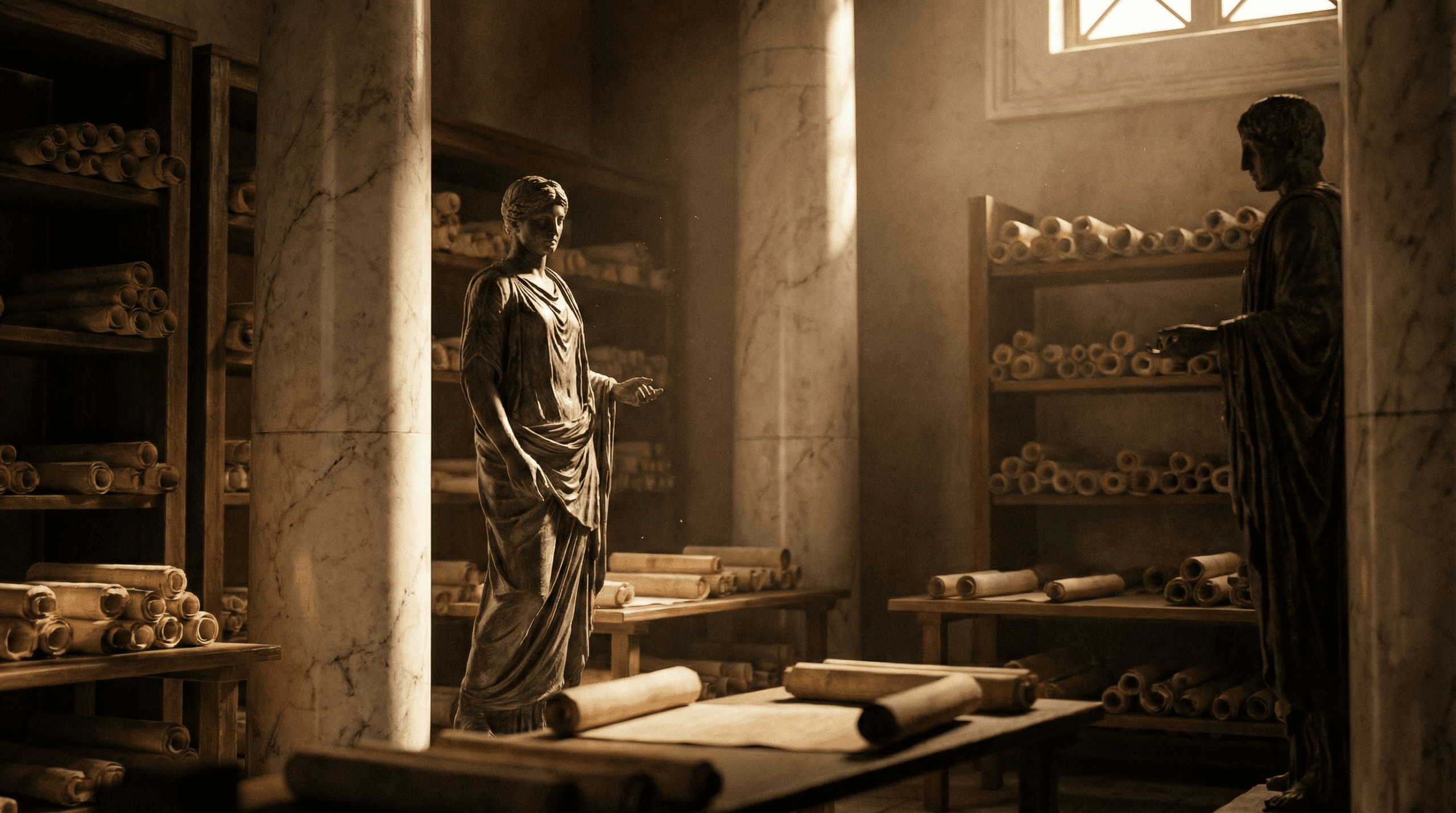
The classical art of memory, ars memoriae, formed the foundation of ancient education. Students learned to construct elaborate mental architectures—imaginary buildings, familiar routes, sacred spaces—where they could store and retrieve vast amounts of information with precision.
But here’s what most people miss about ancient memory training: it wasn’t just about information storage. Stoic philosophers used these techniques to internalize wisdom, making philosophical principles instantly accessible during life’s challenges. When Marcus faced a difficult decision as emperor, he didn’t need to consult scrolls—the guidance was already encoded in his mind, ready for immediate application.
“The universe is change; our life is what our thoughts make it.” – Marcus Aurelius
This quote reveals the Stoic understanding that rapid access to wisdom—not just information—shapes our reality moment by moment. They developed memory techniques not for party tricks, but for character formation and real-world performance under pressure.
The Stoic approach to memory training emphasized what they called premeditatio malorum—imagining potential challenges in advance and preparing mental responses. This connects directly to modern rapid memorization: when you know you might need to recall information quickly, you prepare systems that make it possible.
The Modern Method: Method of Loci Meets Neuroscience
In 2017, neuroscientists at Stanford and other institutions made a remarkable discovery. When they trained ordinary people in the same memory techniques that ancient Romans used, something extraordinary happened in their brains: the neural connectivity patterns shifted to resemble those of memory athletes [1].
This wasn’t just improved performance—it was measurable brain transformation. After six weeks of training in the method of loci (memory palace technique), participants’ brains developed the same distributed network patterns that separate memory champions from average performers.
The method itself is elegantly simple. You take a route you know well—your home, your commute, your workplace—and mentally place items you want to remember at specific locations along that path. But here’s the crucial part that most people miss: the placement isn’t arbitrary. You create vivid, exaggerated, often absurd imagery that makes each item unforgettable.
When researchers tracked participants through their training, they found something remarkable about the speed component. Initially, trainees could memorize about 16 words in five minutes. By the end of training, they were memorizing over 42 words in the same timeframe [1].
But the real breakthrough was retention quality. Unlike cramming, which produces information that degrades rapidly, memory palace encoding created recall that remained stable at four-month follow-up testing [1]. The ancient Romans were onto something that modern neuroscience has now validated completely.
Martin Dresler, who led the research team, explained that the technique works by hijacking our natural spatial memory systems—the same neural networks that help us navigate physical spaces—and repurposing them for abstract information storage.
Step-by-Step: Your 5-Minute Quick Memory Protocol
After three years of refining this approach through real-world testing, I’ve developed a protocol that works reliably under pressure. But here’s the crucial caveat: while you can apply these steps immediately, true proficiency requires practice. Think of this as your emergency toolkit that gets more powerful with training.
Before the Moment (The Preparation Phase)
First, you need at least one reliable memory palace route memorized cold. I recommend starting with your home—front door to back door, hitting every major room in order. Walk it physically five times, then mentally ten times until the sequence is automatic.
Practice basic linking during low-pressure moments. When you read a grocery list or meeting agenda, spend thirty seconds placing those items mentally in your route. This builds the neural pathways you’ll need when time pressure hits.
Develop your personal visualization triggers—the types of imagery that stick most vividly in your mind. I discovered that mine involve exaggerated size, impossible physics, and personal embarrassment. Yours might be different, but they need to be emotionally engaging and visually distinct.
In the Moment (The 5-Minute Technique)
Minute 1: Rapid Assessment and Chunking
Read through all the information once without trying to memorize anything. Identify natural groupings—similar items, sequential steps, related concepts. If you have seven random items, see if any connect thematically. This cognitive organization makes placement more efficient.
Minutes 2-3: Vivid Placement
Now walk your mental route, placing items with maximum sensory detail. Don’t just “put the quarterly revenue figure in the kitchen”—see yourself opening the refrigerator and having $2.3 million in cash pour out onto the floor, burying your feet in green bills. The more absurd and vivid, the better.
For abstract concepts, use concrete substitutions. “Market penetration” becomes a literal market stall with arrows piercing through fruit. “Customer acquisition” becomes customers physically grabbing onto your front doorknob as you try to enter.
Minute 4: Rapid Reinforcement
Walk the route twice mentally at normal speed, checking each location. Don’t panic if something feels fuzzy—strengthen the imagery. If the revenue figure feels weak, add sound (cash register bells), smell (fresh ink), or physical sensation (paper cuts from handling bills).
Minute 5: Speed Review and Gap Check
Final mental walkthrough at double speed. Can you hit every location instantly? If any item requires effort to retrieve, spend twenty seconds intensifying that specific imagery. Better to have six rock-solid items than seven shaky ones.
After the Moment (The Retention Lock)
Here’s where most people fail: they use the information successfully and then abandon the mental palace. Within ten minutes of your high-pressure moment, do one more complete mental walkthrough. This transfers the information from working memory to long-term storage.
If you want permanent retention, review the route once that evening and once the following morning. This simple spaced repetition transforms temporary storage into lasting knowledge.
Frequently Asked Questions
Can I really memorize anything in 5 minutes without prior training?
You can use the basic technique immediately for simple lists of 5-7 items, but substantial improvement requires practice. Think of it like learning guitar—you can play a basic chord on day one, but complex songs need weeks of training. Research shows that beginners average about 16 items in five minutes, while trained practitioners reach 42+ items in the same timeframe [1].
What types of information work best with this method?
The memory palace technique excels with concrete items, names, numbers, and sequential information. Abstract concepts require more creativity—you’ll need to convert them into visual representations first. I’ve used it successfully for client details, presentation talking points, shopping lists, and even complex technical specifications by creating vivid imagery for each component.
How long will I remember what I memorized quickly?
With the basic technique and no review, expect 24-48 hours of solid recall. But here’s the remarkable part: if you review the information once within 10 minutes and again the next day, memory palace storage can last months or even years [1]. The spatial framework creates unusually durable encoding compared to rote repetition.
What if I don’t have a memory palace prepared?
Use any familiar route—your daily commute, the path from your bedroom to kitchen, or even the layout of a store you visit regularly. The key is choosing locations you can visualize instantly without mental effort. In emergencies, I’ve used movie scenes or TV show settings that I know well. Preparation helps enormously, but don’t let perfect be the enemy of functional.
Is this technique suitable for numbers, names, or just word lists?
All three work, but each requires slight modifications. For numbers, convert them to concrete images using a phonetic system (1=hat, 2=hen, 3=ham, etc.). For names, link them to distinctive physical features or create sound-alike imagery—”Jennifer” might become “gin for her” with visual imagery of cocktails. Word lists are actually the easiest starting point because they’re already concrete.
How can I use visual connections to improve my memory?
The key is making connections that are personally meaningful and emotionally engaging. Instead of simply placing items in locations, create dynamic scenes where objects interact with each other and the environment. Link new information to existing knowledge through visual metaphors. For example, if memorizing “quarterly growth,” visualize a tree growing so fast its branches burst through your office ceiling, connecting the abstract concept to familiar growth imagery.
What are some effective ways to chunk information for better retention?
Group related items together in your memory palace, use natural sequences (chronological, alphabetical, or logical order), and look for meaningful patterns before placing items. I often group business information by categories—financial data goes in the home office, personnel information in bedrooms, strategic planning in the living room. This categorical organization makes both encoding and retrieval more intuitive.
Action: Build Your Quick Memory Foundation Today
Stop reading and do this right now: stand up and walk from your front door to your bedroom, counting every major location you pass. Front door, hallway, living room, kitchen, bathroom, bedroom. That’s your first memory palace route.
Tomorrow morning, before checking your phone, mentally walk that route twice. Then grab any list—your daily tasks, grocery needs, or meeting agenda—and practice placing the first three items as vivid imagery in your first three locations.
This five-minute daily practice builds the neural pathways that transform emergency cramming into confident recall. Start with three items, then five, then seven as your visualization skills strengthen.
But here’s the Stoic perspective that changed everything for me: don’t practice this technique for the technique itself. Practice it because rapid, reliable memory creates freedom. Freedom from notes and apps in important conversations. Freedom from the anxiety of forgetting. Freedom to engage fully with ideas and people because you trust your mind to hold what matters.
The Romans understood that mental preparation—just like physical preparation—must happen before the battle, not during it. Those five minutes of daily practice aren’t just skill-building; they’re character-building. You’re becoming the person who can handle pressure with calm competence.
Your memory palace is waiting. Choose your route and place your first image today.
Guided Practice
Memory Palace Practice
Close your eyes and follow along with this guided practice.
Find a quiet place, close your eyes, and follow along.
References
[1] Dresler, M., et al. (2017). How Does the Brain Work?. Neuron. https://doi.org/10.1016/j.neuron.2017.05.030 [^]