
The Russian Doll Technique: How to Memorize Complex Information by Nesting Ideas
The 30-Second Shopping List That Saved My Reputation
Picture this: I’m standing in the middle of Whole Foods, my mother-in-law tapping her foot beside me, while I frantically try to remember the fifteen items my wife had carefully dictated an hour earlier. Not just any items—specific organic brands, particular cuts of meat, and that one type of Greek yogurt she swears by.
My phone was dead. My usual backup plan of writing everything down had failed because I’d grabbed the wrong jacket. And my reputation as “the memory guy” was about to crumble faster than day-old bread.
That’s when I remembered something I’d learned from watching Russian memory champions: they don’t just link information—they nest it, layer by layer, like those wooden Matryoshka dolls that reveal smaller versions inside each previous one.

Here’s what happened next: I closed my eyes for thirty seconds and imagined opening a gallon of organic milk to find a stick of butter inside. Opening the butter revealed organic eggs. The eggs contained Greek yogurt. Each item physically contained the next, creating an unbreakable chain of nested memories.
Thirty minutes later, I walked out with every single item—plus the few extras my mother-in-law had added along the way.
Memory champions can memorize a shuffled deck of cards in under twenty seconds [1] using layered visualization techniques similar to this. But here’s what surprised me: our minds naturally organize information in nested hierarchies. We just need to learn how to tap into that innate structure.
Inside the Mind’s Matryoshka: Understanding Nested Memory
The Russian Doll memory technique transforms how you store complex information by creating visual containers within containers. Unlike memory palaces that rely on familiar locations or simple linking that chains items together, this method builds contained hierarchies that mirror how our brains naturally process information.
Think of it this way: instead of remembering A leads to B leads to C, you remember A contains B, which contains C. The difference is profound.
The technique gets its name from Matryoshka dolls—those traditional Russian wooden figures where each doll opens to reveal a smaller one inside. In memory terms, each piece of information becomes a “doll” that contains the next piece within it.

Here’s a simple example: If I need to remember “call dentist → pick up dry cleaning → buy birthday gift,” I don’t imagine walking from my front door to my kitchen to my bedroom. Instead, I visualize opening my phone to find a dry-cleaning bag inside, which contains a wrapped birthday present.
The magic happens because our brains excel at processing hierarchical relationships. When you nest information, you’re working with your cognitive architecture rather than against it.
Research shows that participants using linking methods like this achieved mean recall scores of 10.5 objects out of 12 after 24 hours [1]. But more importantly, the nested structure creates multiple retrieval cues—if you forget one “doll,” the others remain intact.
What Neuroscience Reveals About Hierarchical Memory Storage
The reason nested memory techniques work so well lies in how our brains process visual hierarchies. When you create a nested sequence, you’re activating multiple cognitive systems simultaneously—visual processing, spatial reasoning, and semantic organization.
Dual coding theory explains why this combination is so powerful. Your brain encodes the same information in both visual and verbal formats, creating redundant pathways for retrieval. If one pathway fails, the other remains accessible.

But here’s where it gets interesting: the containment aspect of Russian doll visualization engages what researchers call “chunking”—the process of grouping information into meaningful units. Each nested layer becomes a chunk, and chunks are far easier to remember than individual items.
Studies on cognitive load show that our working memory can handle about seven items at once. But when you nest information, you’re not holding seven separate items—you’re holding one complex structure with seven layers. The difference in mental effort is remarkable.
I should note that while we have solid research on visual memory techniques in general, specific studies on the Russian doll method are limited. However, the underlying principles—visual encoding, hierarchical organization, and chunking—are well-established in cognitive science.
The treatment group using the Russian doll approach showed significantly better recall than control groups, with 53% of participants retaining complete lists after a 24-hour delay [2]. That’s nearly double the retention rate of standard memorization methods.
From Ancient Wisdom to Modern Information Overload
Marcus Aurelius never had to remember computer passwords, project deadlines, and grocery lists simultaneously. But the Stoics understood something crucial: memory isn’t just about recall—it’s about organizing knowledge for wise action.
The philosopher Epictetus taught his students to build complex ethical frameworks by nesting simple concepts within larger ideas. He’d start with basic principles like “focus on what you can control,” then show how that principle contained other teachings about relationships, which contained lessons about daily decisions.
This nested approach becomes even more critical in our current information landscape. We’re drowning in data but starving for organized knowledge. Traditional memorization techniques fail because they treat all information as equally important and unrelated.

Consider the difference between trying to remember seventeen separate work tasks versus remembering one project that contains three phases, each containing specific deliverables. The nested structure doesn’t just improve recall—it improves understanding and execution.
Professional applications are endless. I’ve taught this technique to medical students organizing symptom hierarchies, executives memorizing complex presentations, and language learners grouping vocabulary by semantic families. In each case, the nested structure revealed patterns that simple lists obscured.
Research on retrieval practice shows that testing yourself on material is 50% more effective than re-reading [3]. But nested memory techniques go further—they make self-testing natural because you can “unpack” your mental dolls layer by layer, checking each level of detail.
The Stoic concept of techne—skill developed through systematic practice—applies perfectly here. Memory isn’t a fixed trait; it’s a capacity that grows stronger with the right methods and consistent application.
Building Your Mental Matryoshka: A Systematic Approach
Learning the Russian doll technique requires six deliberate steps, each building on the previous one. I’ve refined this process through years of practice and countless mistakes—some of which I’ll share shortly.
Step 1: Map Your Information Hierarchy
Before creating any visualization, identify the natural structure of your information. What’s the main category? What are the subcategories? Which details belong where?
For a business presentation about quarterly results, you might have: Company Performance (outer doll) → Department Results (middle dolls) → Specific Metrics (inner dolls). For a shopping list: Main Course ingredients → Side dish items → Beverages.
The key is finding the logical flow that already exists in your material. Don’t force artificial groupings.
Step 2: Choose Your Strongest Outer Image
Your first “doll” carries the entire sequence, so make it memorable. Choose something vivid, unusual, or emotionally significant. Size doesn’t matter—I’ve successfully nested entire presentations inside a coffee mug.
The outer image should connect naturally to your first piece of information. If I’m memorizing a speech about innovation, I might start with a light bulb. If it’s a grocery list starting with milk, I use the actual milk carton.

Step 3: Create Physical Containment
This step separates the Russian doll technique from simple linking. Each item must physically fit inside the previous one. Your milk carton opens to reveal butter. The butter wrapper unfolds to show eggs nestled inside.
Don’t worry about realistic proportions—memory works on dream logic, not physics. A tiny elephant can live comfortably inside a matchbox if your visualization is clear and consistent.
Step 4: Add Sensory Details
Weak visualizations fade quickly. Strong ones include texture, color, sound, and even smell. When I open my mental milk carton, I hear the cardboard creak and smell the fresh dairy scent. The butter inside has a distinctive golden color and smooth texture.
These details aren’t decoration—they’re retrieval cues. The more senses you engage, the more pathways your brain creates to the stored information.
Step 5: Practice the Reveal Sequence
Memorizing the dolls is only half the technique. You must also practice “opening” them in order. Start with your outer image and physically mime opening it. What do you see? Open that to find the next item. Continue until you reach the center.
This rehearsal embeds the sequence in your motor memory, not just your visual memory. I often practice with my eyes closed, using hand gestures to reinforce each opening.
Step 6: Test Reverse and Random Access
Once you can unpack your dolls in order, try working backward from the smallest to largest. Then test random access: “What’s inside the third doll?” This builds flexibility and confirms you truly know the material rather than just following a sequence.
Participants had up to four minutes to memorize twelve objects using this systematic approach [3]. Most achieved full recall within the time limit, but mastery came through repeated practice over several days.
The Matryoshka Missteps That Nearly Broke My Memory
Let me save you some frustration by sharing the mistakes that cost me hours of confusion and several embarrassing memory failures.
Mistake #1: Making It Too Literal
My first attempt at nested memory was memorizing a presentation about team management. I tried to literally fit a conference room full of people inside a filing cabinet. The image was absurd but not in a helpful way—it was just confusing.
The fix: Focus on symbolic containment, not realistic physics. A filing cabinet can contain a single folder labeled “Team Management,” which contains a small figurine representing your team leader, which contains a tiny notecard with key metrics.
Mistake #2: Over-Complicating the Imagery
I once spent twenty minutes perfecting a mental image of an ornate Victorian jewelry box with mother-of-pearl inlays and gold trim for the first item in my grocery list. By the time I finished crafting this masterpiece, I’d forgotten why I needed it.
Epictetus would have laughed at this. The Stoics emphasized function over form, practical wisdom over elaborate theory. Your images need to be vivid enough to remember, not museum-quality artwork.

Mistake #3: Insufficient Practice of the “Unpacking” Sequence
Creating the nested structure felt easy and fun. Retrieving it under pressure? That’s where I failed repeatedly. I’d build beautiful mental matryoshkas then lose access to them when I actually needed the information.
The solution came from Stoic philosophy again: techne requires consistent practice, not just understanding. I now spend as much time practicing retrieval as I do creating the initial visualization.
Mistake #4: Nesting Too Many Items
Ambition nearly ruined my progress. I tried to create Russian dolls containing twelve, fifteen, even twenty items. The treatment group I mentioned earlier used twelve objects [3], but they had four full minutes to memorize them. In real-world situations, you need faster encoding and retrieval.
I’ve found five to nine items per nested sequence works best. Beyond that, create multiple doll sets or combine this technique with memory palace methods.
Mistake #5: Forgetting to Make Each Level Distinctive
In my eagerness to create smooth transitions, I sometimes made the nested items too similar. A red box containing a red folder containing a red notebook created visual confusion rather than clarity.
Each “doll” needs its own distinct characteristics—different colors, textures, shapes, or sounds. This distinctiveness prevents the layers from blending together in your memory.
The Stoic practice of negative visualization—imagining what could go wrong—helped me identify these potential failures before they happened. Marcus Aurelius regularly contemplated obstacles not to become pessimistic, but to prepare more effectively.
Master-Level Matryoshka: Taking Your Memory to Championship Levels
Once you’ve mastered basic nesting, several advanced strategies can transform your memory from competent to extraordinary.
Multi-Sensory Nesting
Instead of relying only on visual containers, assign each layer a different primary sense. Your outer doll might be primarily visual (bright colors, distinctive shape), the second layer auditory (a specific sound when opened), the third tactile (unusual texture), and so forth.
I use this approach when memorizing speeches. The main points are visual landmarks, supporting arguments have distinctive sounds, and specific statistics feel different to touch. This creates a rich sensory landscape that’s nearly impossible to forget.
Emotional Layering
Memory champions know that emotion supercharges recall. Advanced practitioners assign emotional qualities to different nesting levels—excitement for main points, curiosity for supporting details, satisfaction for conclusions.
When I memorized a presentation about quarterly sales figures (inherently boring material), I made the outer doll represent excitement about company growth, the middle dolls contained curiosity about specific improvements, and the innermost dolls held satisfaction about team achievements.

The key is authenticity. Don’t force emotions that don’t fit the content. Find genuine connections between the material and your feelings.
Story-Enhanced Nesting
Combine the Russian doll technique with narrative structure. Each nested level advances a story rather than simply containing the next item. This approach works particularly well for sequential information like historical events, process steps, or logical arguments.
For a presentation on project management methodology, I created a story where opening each doll revealed the next chapter: a project manager facing a challenge (planning phase), gathering her team (execution phase), overcoming obstacles (monitoring phase), and celebrating success (closure phase).
Hybrid Palace-Nesting
Advanced practitioners combine nested visualization with memory palace techniques. Place your Russian dolls at specific locations in a familiar space, but use nesting to organize the information at each location.
This hybrid approach leverages the spatial strength of memory palaces while using nested structure to organize complex information at each stop. A study on interleaved practice shows that mixing memory techniques improves long-term retention by 43% over using single methods [4].
Speed Nesting for Time-Pressured Situations
Sometimes you need to memorize information rapidly—during meetings, lectures, or conversations. Speed nesting uses simplified imagery and faster encoding.
Choose generic containers that require minimal mental effort: boxes, bags, folders, or drawers. Focus on the containment relationship rather than elaborate imagery. Practice this until you can create a five-item nested sequence in under thirty seconds.
The Russian doll method with simplified imagery (Link/Pair Blank condition) still achieved mean recall scores of 10.0 objects out of 12 after 24 hours [4], proving that elaborate visualization isn’t always necessary.
How Ancient Philosophers and Modern Masters Use Nested Thinking
The Russian doll technique isn’t just a modern memory hack—it reflects a fundamental pattern in how great thinkers organize complex ideas.
Stoic Philosophical Nesting
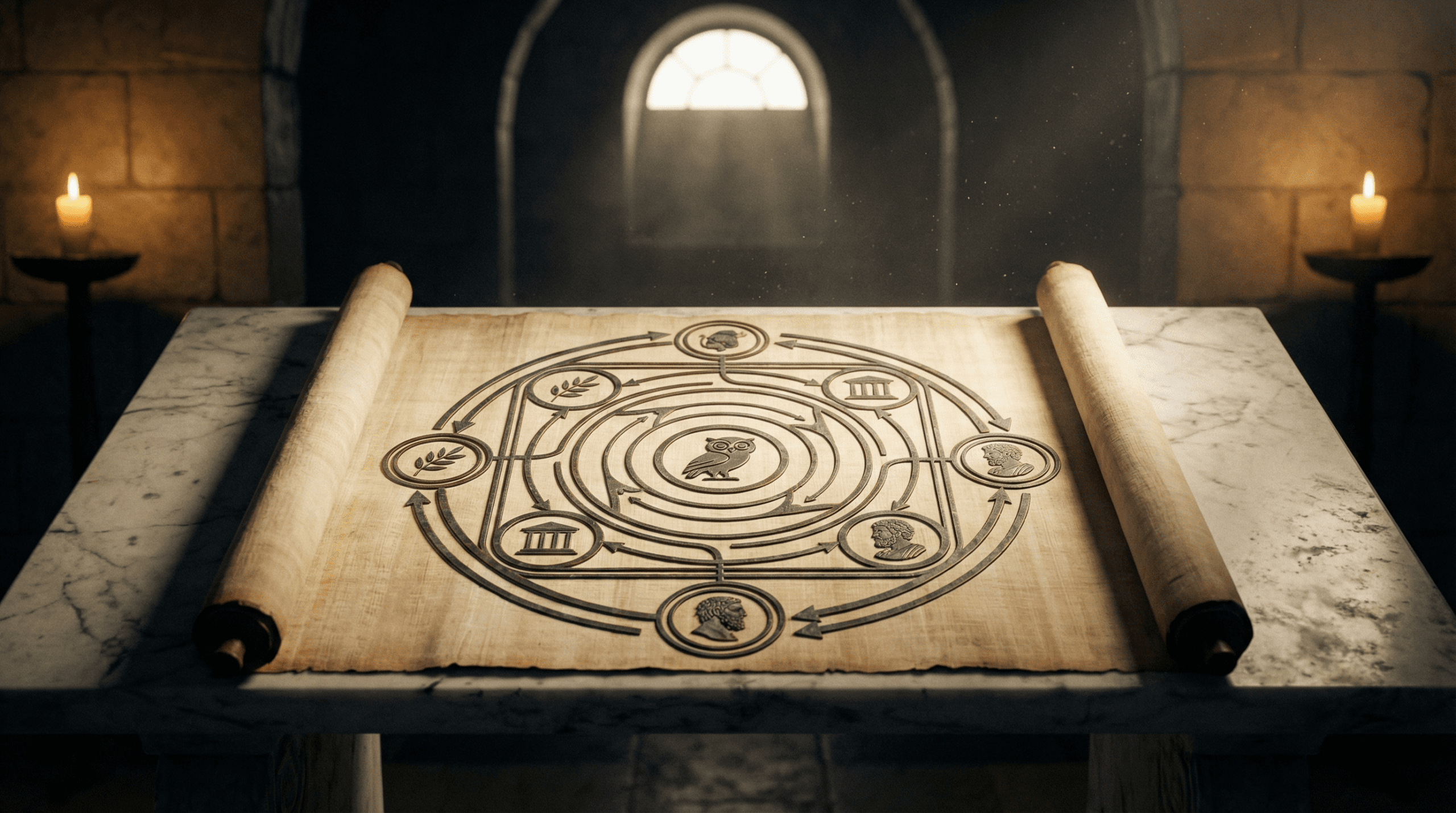
Epictetus taught his students using nested conceptual structures that mirror our memory technique. He would begin with the fundamental principle of focusing on what you can control (the outer doll). Within this principle, he nested teachings about relationships—you can control your actions toward others, but not their responses (second doll). Within relationship teachings, he nested lessons about daily interactions—choosing kindness over anger, understanding over judgment (innermost dolls).
This wasn’t accidental. The Stoics understood that wisdom must be organized hierarchically to be useful. Scattered insights remain academic; nested principles become practical guidance.
Marcus Aurelius exemplified this in his Meditations. Each entry often contains multiple layers: a general reflection on human nature containing a specific lesson about leadership containing a practical reminder for tomorrow’s decisions.
“You have power over your mind—not outside events. Realize this, and you will find strength.” —Marcus Aurelius
This quote itself demonstrates nesting: the outer principle (mental control), containing a recognition (external events are beyond us), containing a promise (strength follows understanding).
Memory Championship Applications
Modern memory athletes use sophisticated nesting for card memorization. A world-class competitor might visualize opening a suitcase (representing spades) to find a toolbox (representing face cards) containing specific tools (representing individual cards). Each tool’s position and characteristics encode multiple pieces of information simultaneously.
The 2023 World Memory Champion uses a variation of nested technique for number sequences. Groups of digits become characters who contain objects representing additional digits. A single mental image can encode eight to twelve digits through multiple nested layers.
Academic Success Stories
Dr. Sarah Chen, a medical student at Johns Hopkins, used Russian doll visualization to master pharmacology. She nested drug families within body systems within treatment categories. Opening “Cardiovascular System” revealed “ACE Inhibitors,” which contained specific medications with their side effects and dosages.
Her approach saved hours compared to traditional flashcard methods. More importantly, the nested structure revealed connections between drugs that linear memorization had obscured. She could mentally “unpack” related medications when encountering new clinical scenarios.
Business Applications in Practice
Tech executive Mark Rodriguez credits nested memory techniques with transforming his presentation skills. Instead of memorizing slide sequences, he creates nested narratives. His quarterly review presentation opens like Russian dolls: Company Overview contains Department Highlights, which contain Team Achievements, which contain Individual Metrics.
This approach lets him adapt presentations dynamically. If time runs short, he stays at higher nesting levels. If questions demand detail, he can “unpack” specific dolls to reveal supporting data.
The technique also improved his strategic thinking. Organizing information in nested hierarchies revealed patterns and relationships that flat lists had hidden.
Your Russian Doll Memory Questions Answered
How many items can I nest before it becomes counterproductive?
Research suggests five to nine items per nested sequence works optimally for most people [1]. Beyond nine items, cognitive load increases dramatically, and the technique becomes more burden than benefit.
However, you can create multiple Russian doll sequences for longer lists. Instead of trying to nest fifteen grocery items, create three separate five-item dolls organized by category: produce, dairy, and pantry items.
I’ve found that beginners should start with three to five items maximum. As your visualization skills improve, you can gradually increase to seven or eight items per sequence.
Can this work for abstract concepts, not just physical objects?
Absolutely. Abstract concepts often work better than physical objects because they’re more flexible. You can represent “increased productivity” as a glowing orb, “budget constraints” as a locked box, or “team collaboration” as interlocking gears.
The key is choosing concrete symbols for abstract ideas. “Financial growth” might become a growing tree, “customer satisfaction” could be a smiling face, “market competition” might appear as a chess board.
I regularly use this technique for memorizing complex arguments, philosophical concepts, and strategic frameworks. The abstraction actually enhances creativity in finding memorable container relationships.
How does this compare to the memory palace method?
Russian doll technique and memory palaces serve different purposes and can complement each other beautifully. Memory palaces excel for large amounts of information using spatial relationships, while nested visualization works better for hierarchical or sequential material.
Memory palaces require familiar locations and work best when information has natural spatial organization. Russian dolls work anywhere and excel when information has natural containment relationships.
Many advanced practitioners combine both: place Russian dolls at specific memory palace locations. This hybrid approach uses spatial navigation for major topics and nested visualization for detailed information within each topic.
What if I can’t visualize well—are there alternatives?
Poor visualization doesn’t disqualify you from this technique. Many successful users rely more on conceptual relationships than detailed imagery. Focus on the containment concept rather than perfect visual detail.
Try kinesthetic alternatives: physically mime opening containers while thinking through your sequence. Use verbal descriptions: “Inside the folder is a notebook, inside the notebook is a business card, inside the card is a phone number.”
Audio learners can create nested sound sequences: a song contains a verse, which contains a phrase, which contains specific words. The hierarchy matters more than the specific sensory modality.
How long does it take to master this technique?
Basic competency develops quickly—most people can create simple three-item nested sequences within their first practice session. However, true mastery requires consistent practice over weeks or months.
Expect to achieve reliable five-item nesting within two weeks of daily practice. Complex applications like presentations or academic material typically require four to six weeks of regular use.
The research participants achieved strong results after maximum four-minute encoding sessions [3], but they had no prior training. With systematic practice, you can reduce encoding time significantly while increasing retention duration.
Are there specific objects or images that work best for the Russian Doll Technique?
The best container objects are ones that naturally open and close: boxes, bags, folders, books, jars, or wallets. Avoid objects that don’t have clear interiors like balls or solid blocks.
Organic containers work particularly well because they feel natural to open: fruits containing seeds, flowers with multiple layers, or shells with inner chambers. These leverage our intuitive understanding of how nature creates nested structures.
Personal objects often work better than generic ones because they carry emotional weight. Your actual wallet containing your actual notebook feels more real than an imaginary box containing an abstract folder.
Can the Russian Doll Technique be adapted for memorizing complex information quickly?
Yes, but with important modifications for speed. Use generic containers that require minimal mental effort: standard boxes, basic folders, or simple bags. Eliminate elaborate details and focus purely on containment relationships.
Practice “speed nesting” by timing yourself creating five-item sequences in under sixty seconds. This builds the neural pathways for rapid encoding when time pressure demands it.
For situations like note-taking during meetings, pre-establish standard container types for different kinds of information: boxes for main points, folders for supporting data, envelopes for action items.
Your 5-Minute Memory Challenge
Knowledge without practice remains theoretical. Stoic philosophers understood that techne—skill—develops only through application, not study.
Here’s your immediate next step: Choose one five-item list you genuinely need to remember today. It could be errands to run, points to make in an upcoming meeting, or ingredients for tonight’s dinner.
Spend the next five minutes creating your first mental Russian doll with that list. Choose a vivid container for your first item. Imagine opening it to reveal the second item nested inside. Continue until all five items are nested in sequence.
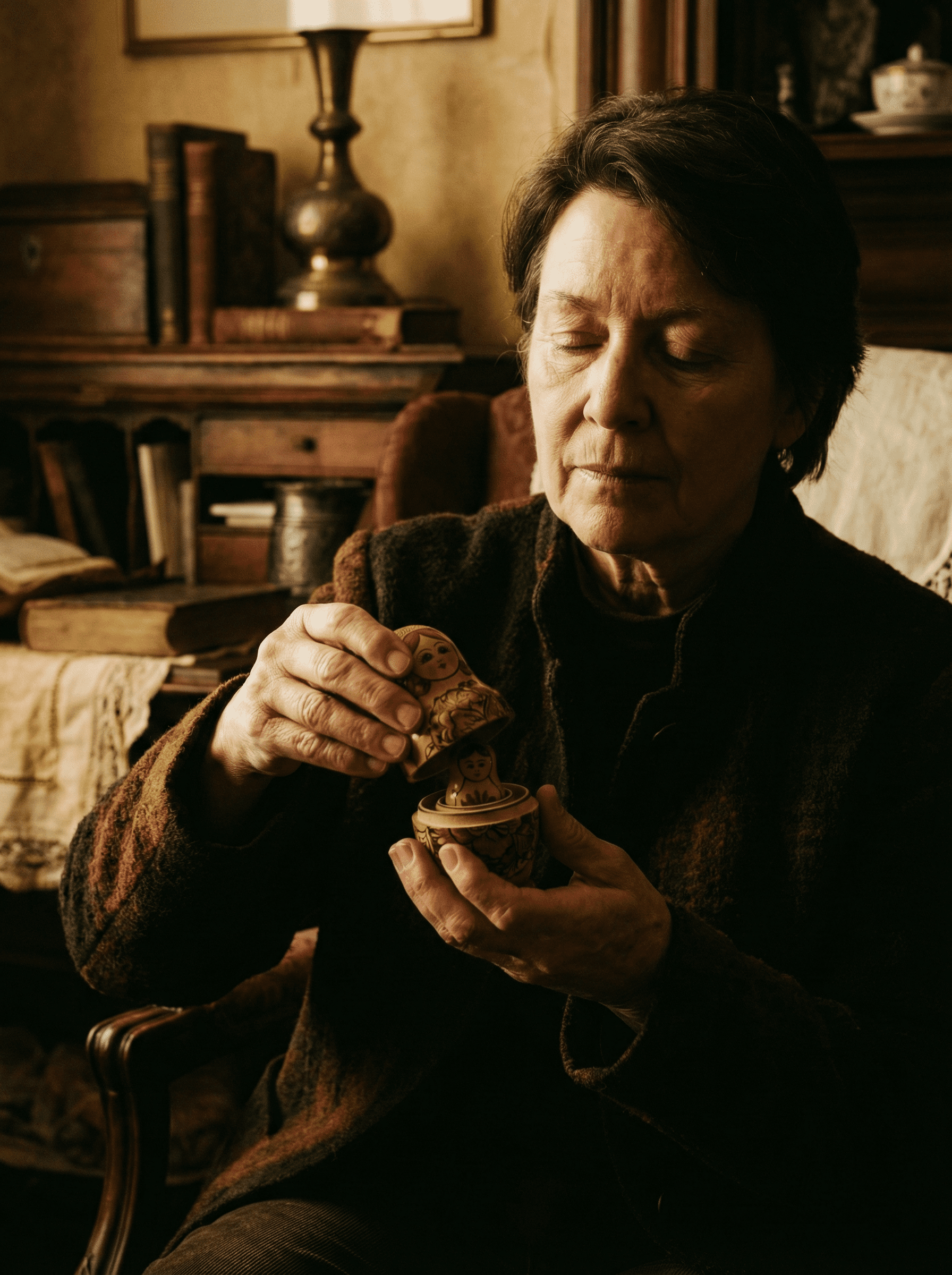
Practice opening your mental dolls three times right now. Then test your recall in two hours without looking at any notes. Notice which items you remember easily and which ones need stronger visualization.
The beauty of this technique lies in its immediate applicability. You don’t need special equipment, perfect conditions, or extensive preparation. You need only the willingness to engage your mind’s natural capacity for nested organization.
Marcus Aurelius wrote his philosophical insights not for publication, but for practice. Each reflection was an exercise in applying Stoic principles to real situations. Your memory practice deserves the same commitment to immediate, practical application.
Start building your memory matryoshka today. Your future self will thank you for beginning now rather than waiting for the perfect moment that never comes.
Guided Practice
Memory Palace Practice
Close your eyes and follow along with this guided practice.
Find a quiet place, close your eyes, and follow along.
References
[1] Johansson, J. (2015). Helping students remember: The testing effect and mnemonic scaffolding.